Every day there are people being abducted by masked, armed men jumping out of minivans, trucks and cars. These people do not identify themselves; they do not show identification, badges, or last names. Their faces are hidden out of shame (while using the excuse of needing protection from the people they’re brutalizing). There is violence being brought against people who have done nothing wrong other than living their lives. We have rights, and they are being trampled on by the United States government. This is truly terrifying and a tidal shift, since if this can be done to anyone in the United States then it can be done to you. I realize that conservatives will say – “well that’s happening to people who aren’t citizens”. But those rights are supposed to apply to everyone, and we are all entitled to due process to prove it in a court of law, and are entitled to the presumption of innocence (innocent until proven guilty). Conservatives famously are unable to understand something until it happens to them. So let’s reframe it in terms they might be able to understand: What if it happened to you? What if some guy in fatigues, a mask, and weapon slam you to the ground and zip tie you despite your protest? If a person can just be targeted on the street and thrown into a van then it could happen to anyone. That means you, dear Republican – you, your spouse, or your children. They may also likely say that’s not going to happen to them because “I look like an American” (which translated from racist coding to English is: Americans are white, my skin is not brown/Americans don’t have an accent from another country). We’re just gonna ignore that white privileged and racist thought for now – but guess what? If ICE is being allowed to do this to anyone, then they can do it to you – there’s literally nothing stopping them. And since people are being assumed guilty and dragged away at a whim, we’ve already lost in a big way. Conservatives who disagree with this are being willfully ignorant.
Brainwashed
Conservatives have been brainwashed for decades which is in large part the reason they respond the way they do when they see people’s rights being trampled on or see the President sending in national guard to states to quell supposed “violence or insurrection”. The brainwashing capitalizes on their inherent racism they’ve refused to deal with. Conservatives have a comically over exaggerated sense of danger and crime regarding cities. This is just racial coding that exists generally as part of our culture of white supremacy but to those who watch Fox news and other conservative propaganda outlets it’s been weaponized to almost comically tragic proportions. They talk about cities as if they’re a literal war zone, clutching pearls at the thought of going anywhere near the city. And the targeting of cities is purposeful as it helps associate the places that vote overwhelmingly Democrat with negative associations like crime and corruption. When they see or hear of people abducted off the streets by government thugs they will immediately call on their brainwashed ideas that immigrants are mostly criminals or drug dealers. They are very much shielded from the visuals of normal everyday men, women, and children being dragged out of cars or grocery stores minding their own business. They are carefully shown by their media of choice only images of very selective video of someone fighting hard against being taken or someone who fits a stereotype that they commonly expect to see. I want to be clear – Republicans do not get a pass because they’ve been brainwashed. It’s easy enough to understand or figure out their beliefs are nonsense – the problem is that they choose to buy into it and don’t want to know any differently. You may wonder why people would engage in brainwashing – it’s simple really, it’s for the money. Conservative culture is ripe for grifting, just look at the fortunes amassed by Rupert Murdoch, Rush Limbaugh, and Sean Hannity. Sean Hannity recently bought a 2nd multimillion dollar beachfront condo for $14 million to merge it with the one next door into a single residence. And this just after recently purchasing a different beachfront property for $23 million. Unfortunately, it pays to sell division and anger at the expense of your country – unfortunately for us capitalism happily rewards it.
Military in the streets
Trump has wanted to turn the military against citizens for a long time, ever since his first term. He once asked if he could have the military shoot protestors in the legs. To the brainwashed, this sounds unbelievable that their “great” leader would do something like that without someone deserving it. Besides the fact that no protester could “deserve” it, it betrays a difference in understanding of who Trump is versus who the brainwashed conservatives see him as. Trump has an extremely fragile ego and juvenile personality. He can’t stand to be told he’s wrong and can’t handle people challenging him – which is one reason he surrounds himself with yes men.
His goal is to have the military do his bidding in attacking and controlling the citizens of the United States. Trump has no concept or respect for the constitution or the government it has tried to define in America – if you recognize that he’s essentially a selfish toddler that thinks he’s entitled to absolute obedience as a king then you understand him and his motives.
Hell on earth – complements of the “followers” of Jesus
The fact is that ICE’s tactics, the devastation to public health through the CDC, the corruption of the department of justice among so many other things I won’t name here are all part of an unleashing of hell on earth, especially to the least of these. I personally know many people who truly try to be faithful to Jesus’ teachings, and they were absolutely thrilled when Trump won the election of 2024. If they still support Trump, then it’s my sincere hope for each and every one of them that they are made to endure the hell that they’ve unleashed on others. Despite their own efforts and self imposed piety, they are as far from Jesus as if they had no faith at all. They can go to church all they like, pray as much as they can, tithe faithfully, read their bible religiously but it doesn’t mean anything. There are legions of atheists and agnostics all over the country who represent Christ better than any of conservative Christian would on their best red letter day. May every Christian who supports Trump be shown for the absolutely morally bankrupt hypocrite they truly are and may they never know peace.
What you can do
We need to stand up for our neighbors, fellow citizens, and those abducted by our government. It’s so important to join the fight against Trump’s authoritarian overreach. The conservative leadership’s reaction to protests, especially the “No Kings” protest is telling as it shows their hand. Mike Johnson, speaker of the house/human-snake hybrid/Christian hypocrite extraordinaire is spinning shameful propaganda, equating protestors with terrorists, in concert with the rest of the Trump administration. The fact that they are bothering to address it and spin propaganda shows how dangerous the movement is to them. Consider that during all 4 years of President Biden’s term, there were no nationwide protests. We’re not even into the first year of Trump’s term and I personally have been to at least 6 protests (and there have been others I haven’t attended). Conservative anger ginned up by their propaganda outlets doesn’t have a basis in reality, and it shows by the general lack of action (except for the Jan 6, 2021 insurrection, of course). While their anger is real, it lacks substance or a basis in reality; it’s a general malaise of temperament that affects the brainwashed.
These protests which occur throughout the entire country make this point subconsciously and directly to conservatives driving by. Even if they flip off all the protestors as they drive by in their huge overcompensator trucks, they are faced with the cognitive dissonance that something unique is happening. This is something that we haven’t seen before – or at least haven’t seen in the 2 or 3 generations since the Vietnam war. The protests bypass the Fox “News” propaganda echo chamber that Trump uses to fool the fools. They may try to tell themselves all the people out there are “paid protestors”, but they know deep down it’s not true. They are forced to confront it and they know something is wrong – and Trump can’t control that. In fact he hates not being able to control it. Furthermore, our protests will encourage others that may want to get out there and stand up but need a little encouragement from seeing others who feel similarly to how they feel. This is our act of solidarity, our message of hope to those being mistreated and trampled on. This is goodness standing up against the forces of corruption and the worst impulses humanity brings to the table. I’m going to be out there on 10/18/2025 – I hope to see you there too!
Can I ask you a question? Whose side are you on? It’s not intended to be a rhetorical question. I really want you to answer that for yourself. Are you on the side of democracy, the side that believes people should be free? The side that believes no one is above the law and that authoritarianism and fascism are evil? I can’t imagine anyone would answer no to that. But we are at a watershed moment right now. This is a chance to make a meaningful choice to determine the type of person and the type of legacy that you will leave on this earth. I’m 43 years old – for most of my life I have wondered about how Germany could possibly have supported Hitler, and how people could have actually been a part of Nazism and not understood that what they were doing was so evil and so wrong. I know that I’m not alone in that sentiment – in everything from movies to books to history lessons – in everything having to do with Nazis or Nazi Germany, it is always readily apparent and beyond obvious that Nazis are the bad guys and everyone roots for them to lose. I think this is one of the rare things that we can all agree on. The idea that they deserve everything bad and are irredeemable and hopelessly awful – there is no debate about this point. Which brings me back to my original thought – I have always wondered how they came to be and have always found it inexplicable and unlike anything I could ever imagine a human being deciding to be a part of. Until now. You know what else I think? I think that if you would have asked them if they knew that they were the bad guys or if what they believed in or supported was evil they would have emphatically told you no. I think they would have believed wholeheartedly that they were in the right and justified in thinking so. Before we get to the watershed moment we need to address a different question. Is it possible to know which side we would have been on in Germany if we were alive in that era? Would you have been a Nazi supporter or would you have been someone that recognized that it was a vile and evil party? Your answer to this question will be the same as your answer to the next. And that question stands before you today, right now. You get to know what kind of person you would have been by answering one simple question. If the election has happened then that question will be behind us, which might even be sadder depending on the outcome of your answer. This is your chance to test your metal, to make a decision for who you are. I imagine that in the years which followed the fall of the Nazis, those who supported Nazis felt shame and their children and grandchildren feel shame still for their relatives who had supported them. Conversely, pride and admiration for those who stood up to them. You don’t get many chances in this life to make this type of decision. Looking at the presidential campaigns, statements and actions of the two candidates Harris and Trump – one of those camps has a lot of scary things that map directly to what helped give life to Nazism through fascism. This is not just a partisan statement that could be turned around and just as easily said about the other party. There is actually only one party that is legitimately and wholeheartedly embracing aspects of fascism. The other one is not – full stop. I don’t say that lightly, and it’s easy enough to verify that claim – if you are brave enough and honest enough to look.
There are a couple of other watershed moments that we’ve been able to have in our lives, and it’s been on my mind to address them as well, which I will. Much like what I stated about Nazis, I’d had the same thoughts about the Confederacy that brought about the civil war. While I always knew that slavery was a part of America and that racism is an ongoing issue here, it was always obvious to me (and I’m sure to you) that slave holding, racism and the Confederacy were wrong and evil. I couldn’t imagine how any individual could possibly justify, stand up for or fight for such a vile cause that is so egregiously wrong. It took me an embarrassingly long time, until 2020 to finally understand the following idea: The racism that was responsible for the Confederacy and everything else is still alive today – because of that, we have an opportunity to see what kind of people we would have been back then. You might wonder how as things have changed so much, right? If you oppose DEI, affirmative action, roll your eyes at the idea of reparations, or think critical race theory makes someone hate America or makes people racist against white people, then congratulations – you would be a Confederate or Confederate sympathizer. You’re able to perform the same mental gymnastics that they did and still feel good about yourself at the end of the the day. It’s an uncomfortable thought exercise, but you can take this through the different eras in American history. Ever wondered what you would say about segregation? If you would just go along with it or stand up to it? The Civil Rights act? Whether you would have thought Martin Luther King Jr at the time was an inspiration or just a trouble maker stirring things up by talking about race? The same answer applies. It’s not fun to realize that you would have been the bad guy, and I’m pretty certain that if you are the bad guy you’re not going to agree with me and will write me off, just like those Nazis would have. The chances are that whatever side you fall on for one question, you’ll land consistently on the same side for every other I’ve posed. But just know for the rest of us, when we see a Trump sign or a MAGA hat, we don’t see something edgy or just a political party preference.
We see you.
We see you for what and who you are. It is always in the front of our minds when we interact with you and measure who you are as a person. You are probably a nice person to interact with in most/all circumstances. You probably go to church every Sunday. You probably say you “don’t see color” and treat everyone the same. But inside, you are full of anger and blame others unfairly for any hardships you have. You are ignorant and unwilling to listen to views which challenge yours. You consume information which only affirms what you already believe. You say racially charged things when everyone in the room looks like you because you think that makes it a safe place for you. I said earlier that we get a few chances at these watershed moments to decide who we are as a person. Those moments are decidedly important, they set the tone for the rest of our lives. But they also set the course to help us make the more routine decisions in our everyday lives. Decisions like when we decide to fight against our implicit bias, recognize what privilege we carry, use inclusive speech, and show kindness and love to others who are different than we are. I encourage you to start making those decisions today and make your way over to the side of history that you can be proud of and that your children and descendants will be proud of too.
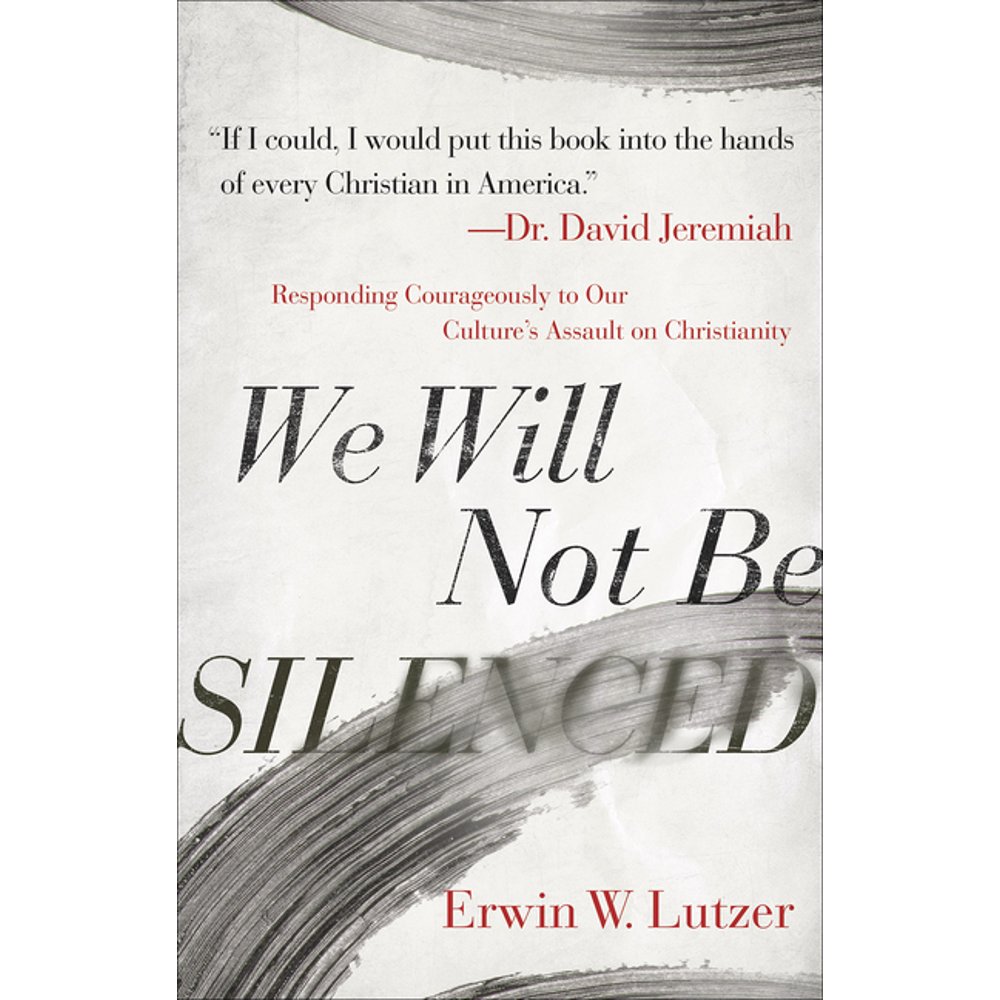
I recently finished reading Pastor Erwin Lutzer’s book “We will not be silenced”. I was given the book as a gift by a relative, in response to some of my opinions on the subject of Black Lives Matter, Covid-19, and my thoughts about former President Trump. The intent, I believe, was to show a Godly, Christian view of the many things happening in American culture. I was already familiar with Lutzer, as I’ve listened to many podcast devotionals from him over the years – in the past, I’ve appreciated his points and have benefited from listening to him. I would say that I had even respected him, as a pastor. After reading his book, however, I am having to rethink my perspective of him. In what follows, I will share my thoughts and opinions in a critique of his book. Lutzer covers a lot of ground in this book, sharing his thoughts on BLM, Islam, LGBTQIA, among others. I found myself shocked to hear him say a great many things in his book – and while I’ve focused on some of the most egregious things he says, there are plenty of other thoughts in his book which I’ve left unaddressed but are congruous with the disappointing worldview which he exposes to his readers. In critiquing his work, I think it would be helpful to define criteria to determine whether statements from Lutzer are trustworthy, accurate, or loving.
Those criteria are as follows:
Dr Lutzer claims that science proves him correct on many issues. If we find that science, in fact, does not support his claims then we should consider that his ideas relating to science are also unreliable.
If he misrepresents the perspectives of groups of people with whom he disagrees, then this calls into question his knowledge and trustworthiness, and should serve as a detriment to his credibility.
In places where he gives anecdotal examples of societal issues, if he fails to address the opposing perspectives, we should as Christians ask whether he is truly acting in love. We can question whether he is truly acting in good faith with the perspectives he brings to the issues at hand.
One of the primary themes that runs through the book is that of race relations. While race relations seems to be his obvious motivator, his overarching strategy is to discredit anyone who disagrees with him by labeling them a Marxist – which it seems in his view, is about the worst thing ever. His attempts to do this amount to little more than trying to point out how Marxism has an element that desires to correct power differentials – and then attempting to link the similarity between White privilege and attempts to rectify it in our own society to being in line with Marxism. This, and falsely positing that those who want to correct this want the government to control the means of production, etc(p184). His arguments are more or less just assertions of opinion, which themselves seem to be designed to gin up fear and anger in his readers, who likely are already familiar with topics being addressed in this fashion. The main difference being that in this book, there are a couple of scripture verses strewn throughout, as well as some very half hearted (albeit short) admonitions for trying to be respectful and compassionate when engaging with those on the left(p116,123,124).
In addressing race, he seems interested in absolving himself and White Christians everywhere from the stinging charge of being called racists(p85, 115). I believe that there is a self-conscious shame that permeates his writing, and it comes out in self righteous denial of wrongdoing. For many Christians, our “Christian bubble culture” is one in which we are accustomed to meting out indictments on the rest of the culture at large – be it homosexuality, sex out of wedlock, abortion, violence in culture, pornography, gambling, drinking, dancing, smoking, chewing, swearing, etc. It truly is a mindset which frames everything in terms of “us vs the sinful world which desperately needs our help”. This sets up an interesting problem (among others): what happens if and when the Christians get it wrong? What happens if, despite their best attempts at “being in the world but not of the world”, something from the world, something highly immoral makes it into their culture? What if it’s been there so long, and has so shaped their thinking, that it feels normal or right to them? What would happen if they were to be confronted with it? Do they have a framework of humility and self-reflection that, regardless of the source, when presented with an indictment of behavior, are able to process it graciously and with penitence? What if they don’t have a framework or experience dealing with egregious church culture failures? How might they respond? They may be tempted to respond with indignation, anger, recrimination, and incredulity, something along the lines of “How dare you!?”. Not only this, but the charge would feel so foreign, so outrageous, that after scoffing at it, it would probably be ignored and dismissed as lunacy, with no real need to engage it constructively, and no real need to try to discern if maybe there is something that needs to be pondered on a more serious level. Which brings us to Lutzer’s book – and almost immediately, he defuses the “race card” bomb – by decrying at the outset that he’ll probably be called a racist because that’s what happens when you try to engage in good faith on this topic(p20,81,85,108). He says that leftists want to silence Christians, because as he states elsewhere, the leftist agenda can’t stand against reasonable arguments, debate, science, etc(p29,33). He then shares how a White NFL quarterback got in trouble for saying that Black football players shouldn’t kneel during the national anthem (105). But Lutzer doesn’t address or interact with why people are engaging in this noteworthy behavior, even though as a self professed good faith debater that would be the expected course of action. So despite accusing the left of not wanting to have good faith arguments or spirited debates, he totally avoids addressing the true issues at hand. So I will touch on some of the points that he curiously didn’t visit – because I get the sense that he hasn’t done even the most rudimentary investigation as to what is going on before condemning it outrightly. Pastor Lutzer, the problem is that Black people in this country suffer disproportionate amounts of violence at the hands of police. And at the risk of sounding pedantic, let’s talk about what disproportionate means. Let’s say that White people make up 50% of the country, and Black people make up the other 50%. If police violence hurts/kills/affects 10% of people, then both Blacks and Whites would be expected to be equally affected – that is, of those affected, 5% would be Black and 5% would be White (together making 10%). If, on the other hand, we found that 9.5% of Blacks are affected, and only .5% of Whites are affected, we would say that this is disproportionate, since it doesn’t match the demographic makeup of our population. And this is precisely the problem we have in the United States. In the US, 13% of the population is Black, and 61% is White. This means that we would expect police violence to generally affect the same proportions. However, we find that armed Black men make up 25% of those killed, and unarmed Black men make up more than 33% of those killed. Lutzer conveniently ignores this, even though it gives a powerful explanation for the protests and the intense focus on the police and their funding. To discuss these issues, as Lutzer has done, and not deal with the disproportionate violence against those who are Black is to not engage in this subject in good faith. So we have to ask, how could Lutzer miss addressing such an obvious point like this? Even the most rudimentary and half hearted search for information about BLM protests or kneeling during the national anthem would inform the curious party to this and other points. I have to wonder, did he not try to find this information out himself, or did he know and choose not address it? If the former, then shame on him; it would be extremely lazy and disingenuous to feed people your uninformed opinions and would require repentance for misleading people through omission. If it is the latter case, we need to ask, why did he not address it, as this is foundational to what critical race theory (CRT) says we should be able to see if it is correct in its hypothesis that our society is fundamentally set against our Black citizens. If he thinks that these statistics are unpersuasive, then it would behoove his position to state why they are unpersuasive, and would deal a critical blow to the so-called leftist ideology he opposes. So we are left wondering – did he omit this discussion by accident, and therefore miss a golden opportunity to destroy a liberal argument, or did he exclude it because it was damaging to his own arguments? I do hope it’s not the latter because if it were, this would demand him to repent and acknowledge a certain purposeful deception in order to bolster his own arguments – and deception is not a very Christian thing to do. The truth is, that these statistics show not only an ongoing problem, but are indicative of one which has been going on now for the last 322 years or so. And this problem is one of White supremacy – a problem which Lutzer does his best to steer well clear of in his book. It is the reason why so many, like him, take issue with anyone standing up for the mistreatment of our Black citizens. And the classic way to avoid it is to redirect it – with the aforementioned criticisms of those who kneel, protest, etc. The disproportionate violence against Black people, when honestly considered, raises some other uncomfortable questions. Why, as a society, are we so indifferent to a people suffering disproportionately, and how has this been allowed to happen in a society which espouses equal treatment under and by the law? Might this, like a wet, moldy spot on drywall, indicate that there are other more insidious and structural issues beneath the surface? Why do we get so defensive at the idea that our society might have racism built into it? Is this a result of willful negligence, a practiced indifference which expertly places blame on any who would question it? Lutzer illustrates this effectively by his portrait of the White QB. Rather than allowing the spotlight to shine on the unjust suffering of a group of people, Lutzer redirects attention to the poor White QB who said something foolish. And this is the name of the game, distract from the issue at hand (murder, violence, poverty) and focus attention and sympathy on the oppressor. This effectively prevents society from learning from its failures and instead helps to bolster its flawed position and prevent change for the better (for nothing will change if there’s not a reason to change it). Any attempts to get society to take notice and change are rebuffed in this way and others, helping to ensure that the thoughtless and callousness of our society will continue on for another generation, as it has for many past. An important question to consider, is why doesn’t Lutzer, or other Christians at large, care to investigate or consider whether these injustices are real? Why are the pleas for change so often dismissed outrightly and with such contempt? In my opinion, it is because they have put secular political perspectives above their loyalty to Jesus Christ, and have decorated these ideas with Christian lingo. This allows them to proceed with the false confidence that their actions and words are biblical and as such, outside of the realm of that which may be questioned. If they allowed themselves the opportunity to self-reflect, they might recognize their error, and start asking other important questions. Questions like what other areas of our society display an indifference to suffering, or what other aspects of society are systemically unjust? These seem like questions which are in the purview of Christianity – albeit, a Christianity that isn’t beholden to a political party. These are questions which are naturally raised when we see athletes kneeling on a sports field. We might also ask what it says about our society that for over 300 years, we’ve been so indifferent that it takes such very public acts to get people’s attention? And rather than address it, people still find ways to ignore the actual issue at hand and turn it around, as though the behavior is offensive to them! Seemingly incensed at the racial issues being brought to bear in the culture, Lutzer rails against people removing statues, the calls for Jesus to be removed from stained glass windows, and accuses those who call for change of wanting to stir up racial divisiveness and destroy America(p42,46, 72, 74). He makes almost no attempt to consider why people want to remove statues or Jesus from stained glass windows – it’s hard to imagine that a man who feels strongly enough about these issues to write a book about them doesn’t actually know the “why” behind them. Even if he disagrees with the “why”, his lack of serious engagement with any counter arguments suggest his purpose – to justify himself, and the Christians who look up to him, for continued apathy and further cultivating the acceptance of the church’s culture of racist White supremacy. Briefly, I’ll touch on the “why” which he failed to address.
Many statues which are being brought down were put up originally by overtly racist organizations, like the Daughters of the Confederacy. These groups put them up after the war for the purpose of furthering racial terror, as a kind of menacing message to recently freed people after the civil war. This was done against a backdrop of hundreds of vigilante mutilations and killings of Black people throughout the country, but especially in the South – also known as lynchings. These killings were mostly left unprosecuted, even though everyone knew who was responsible – in many cases, there were crowds of people who gathered to enjoy the spectacle, who reveled in the violence and would pose for pictures and take souvenirs, in the form of mutilated body parts when the gruesome crimes were finished. Of the countless hundreds (or thousands) who watched, I can guarantee there were many Christians. When statues which depict those who facilitated or participated directly in human enslavement are targeted for removal, it is usually not even for destruction; the idea is that the statues (because they are historical), should be moved somewhere where proper historical context can be given about the statue, including but not limited to the reasons for its controversy. That is, the statues shouldn’t be glorified, but rather shown in the proper light, with information about what they’ve done, both good and bad. Additionally, and I would presume, most importantly to any pastor worth his salt, by removing the statues from the very public spaces, they can be prevented from inflicting any more emotional harm on those who still suffer consequences from not only enslavement of their ancestors, but who have to deal with on a daily basis the very real affects from chattel slavery which is still felt in our society today. As a White gentleman, Lutzer may not have first hand experience with the pain involved in seeing confederate/slave holder statues – but there’s nothing that should prevent him from empathizing with those who do. By addressing the statue controversy as Lutzer has done, he is essentially whipping up ire in his readers by presenting the issue in a hyperbolic fashion, leading them to assume the worst rather than treating the issue in an even handed and reasonable manner. He is acting as though his opponents desire for all statues, even of the founding fathers, to be destroyed – and this is simply not true. This is all done while minimizing the impact of the statues, painting, etc to people of color. To me, this is the definition of arguing something in bad faith.
Now for the stained glass Jesus. Lutzer gripes that the “leftists” want to remove depictions of Jesus from stained glass windows(p46). While that is a very impactful and offensive concept to Christians, it’s important to (again) mention what the reason is that people might be advocating for its removal. In fact, not mentioning it again paints Lutzer in a negative light, as one might wonder if he is being purposely misleading. The reason for removing the depiction of Jesus is because of its’ linking with White supremacy. Jesus is depicted as White in much of our culture, through paintings, pictures, and stained glass windows in some cases. The problem is that Jesus is a Jewish man from the Middle East – not a White European. This isn’t a new revelation and you don’t really need an advanced degree to know this – also, it’s not something that we’ve only recently discovered. So, why have a White Jesus? Because, White supremacy is baked into our culture, and also into the church – so much to the degree that we don’t even think to question it. And when someone does question it, our self-righteousness and moral superiority well up to defend us and attack whoever would dare to question our moral standing. As I’ve mentioned before, Lutzer is responding to a perceived attack on his moral standing, and Christians do not have a category for a legitimate critique of their group wide moral failures. Rather, the response is a reflexive attack on the source of criticism, instead of a humble consideration of whether the critique has merit. The point is that the conversation is not as simple as Lutzer would lead us to believe – but since it hurts his position, this concept is conveniently omitted, as he has the habit of doing for many of his points.
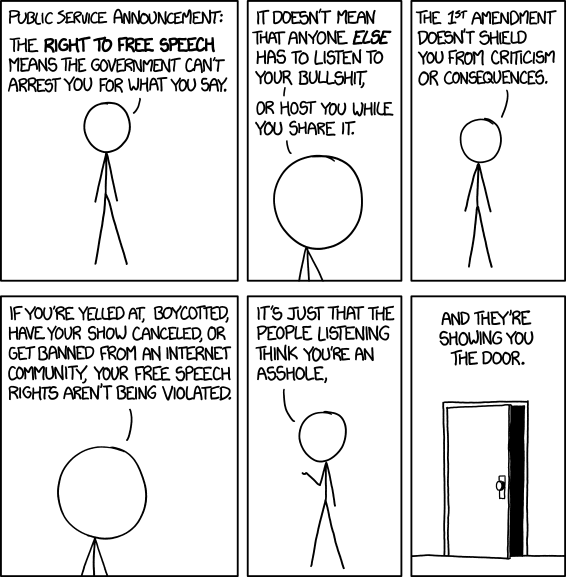
There’s a pattern Lutzer uses throughout his book which goes like this: he outlines a grievance with a group, omits their side of the story, and then tries to link them to Marxism or secularism. The grievance may take many different forms, but ultimately he posits that the outcome will be the transformation of America as we know it to Marxism, the silencing of Christians, or the breakup of the nuclear family unit(p21, 22, 42). Regarding the silencing of Christians, this trope has existed within the Christian community for some time. Despite its prevalence, what I’ve noticed is that more often than not, people don’t want to take away their freedom of speech; rather, we want them to speak the truth, and argue in good faith. Oftentimes when a person faces blowback for saying something, or “gets silenced”, they’re not actually having their free speech stepped on and they’re certainly not getting silenced by the government. Rather, companies choose not to air their nonsense. Or people choose not to engage with them. There’s a great comic by XCD that I remember reading years ago, and as a conservative Christian, it made me angry.
It’s interesting because the comic doesn’t actually mention politics or religion, yet I sensed that it was a polemic against my beliefs at the time. It stuck with me, and over the years, when people would say controversial things, or I thought about things I might like to say, I would think about that comic. I would begin to wonder, “Is what was said actually something that should be said? Is it actually a good thing to say? Is it actually a true thing to say? Is it ignorant or well researched?”. Over time, I began to realize that, in fact, no, those things that were said were often just genuinely offensive and made people angry because they were the words of a person who was ignorant, or couldn’t be bothered to reflect genuinely on their own thoughts, or interact in good faith with other ideas. So when Lutzer complains that Christians are being silenced, ask yourself whether that’s true or if it’s not just that people, to paraphrase XCD, are showing you the door, because they think you’re being an a**hole. While admittedly crude, what he genuinely needs to ask himself is, “Am I being one?”.
Rather than continue to multiply examples of the pattern mentioned above (because there’s only so many times I can say that he’s trying to link progressives with Marxism), I’d like to shift focus to highlight some of the dubious things he mentions, which I hope will paint a picture of the type of person he expresses himself to be. Lutzer says that “humanists” want open borders for the purpose of diminishing “White culture” and to create dependence by giving free housing, healthcare, and other free things in exchange for votes(p59). Who the humanists are, I’m not sure – however he also snidely comments that they do this under the guise of compassion and justice, so I take it he’s not talking about his own crowd – which is odd, since one would expect to find compassion and justice as the cornerstone of his politics. He immediately links this fictional immigration scenario with sex traffiking, drugs, and gangs, which probably wouldn’t cause anyone in his camp to bat an eye, but the problem is how incredibly ignorant, and yes, racist it is(p58, 59). Speaking of which, he references violent crime in Black neighborhoods to ask sarcastically whether “ALL Black lives matter” (61), which is basically a combo move for White people who want to denigrate the Black Lives Matter movement – he combines the “whataboutism” of “what about Black on Black crime” with the ignorant phrase “All lives matter”. Well done, Pastor Lutzer, you are obviously well versed in White fragility.
In what I would describe as the most shameful portion of the book, Lutzer makes the case for inequality (p77). He does this using the parable of the talents, saying that there are some people who are given more [wealth] and therefore prosper to a greater degree. He goes on to say that there will always be inequality, and all we can do is ensure equal opportunity, but we must not expect equal outcomes. And while he admits that minorities are often faced with greater obstacles and challenges which we should fight to remove, outcomes are dependent upon the skill and talent of the individual. Please don’t miss this – what he is doing here is trying to account for the enormous wealth gap between White and Black families (this is also highly disproportionate in demographics) – and I interpret his explanation to mean that he believes White people are superior in their talents and skills. This is further shown when he enthusiastically quotes Jude Dougherty, who says: “Men differ in strength, intelligence, ambition, courage, perseverance and all else that makes for success. There is no method to make men both free and equal”(p78,92). Despite how utterly shameful this is, it really gives insight into his perspective on race, narrow as it is – and likely insight into how many other White people think as well. While not surprising, it does make me wonder if they are consciously aware of the implications of this line of thinking? If they are not, the possibility exists that once made aware, they might in sorrow repent for this deplorable belief. If in fact they are aware of their thinking then I’m not sure why they would bother decrying the label of racist – they should just embrace it.
Lutzer makes clear that he believes that talking about race issues is divisive, and that doing so seems to make things worse(p73, 74, 80). At the same time, he also (very briefly) concedes that systemic racism exists. What he fails to mention is what form or shape this takes, as well as the vital question of “how can we determine if there is systemic racism?”. He rails against “The 1619 project” as well as Critical Race Theory – two vital tools useful in identifying systemic racism. But he claims that these things have a goal of “causing people to hate America” as well as causing the complete erasure and destruction of democracy as it stands today(p42, 50). He also believes that it causes us to focus on all the bad things that the founding fathers have done to the exclusion of any good that they’ve done. And, according to him, they’re merely tools for the secret agenda to convert our country to Marxism, apparently. But as someone wise has said, “focus on what they do, not what they say” – this will keep us focused on what the real issue is. Lutzer tries to exclude those tools, as well as clamp down on talking about race in general. He says that we’ve made great progress in our race relations, and that all this talk of inequity and racial strife is setting us back. He would prefer that we just focus on making sure everyone has equal opportunity, as outlined in our constitution, so that people are responsible merely for themselves and their actions alone. He doesn’t want people talking about issues related to race. As a fellow White person, I can understand why he might think this is the right approach. We typically get the benefit of the doubt in situations, and we get to go through life thinking that race doesn’t exist (or at least not be impacted in a negative way due to the concept of it). We live in a culture where the default idea of “human” includes Whiteness. He and I will get the benefit of the doubt when in a store, or walking somewhere late at night, or during a traffic stop, and we won’t think twice about what it might be like not to have this, since we’ve always had it – after all, it’s easy to do this with something that you have just taken for granted for your entire life. We get to assume that everyone else goes through life exactly as we have, and so it’s no wonder why talking about race or the benefits of Whiteness is strange and uncomfortable for him. While he can’t be faulted for not discerning these things on his own, I fault him with willfully leaving the blinders on after he’s been told he’s wearing them. CRT, 1619 Project, protests, kneeling at sports events, movements to defund the police are all tools, hints, and warnings that we have (White people) been walking around with blinders on. To ignore these things and to embrace the blinders is cause for fault for all who do so. More so for Christians. And to a much greater degree for Christian leaders in the church. Regardless of whether you are laity or clergy, we know the error of the Pharisee – so sure of their own righteousness that they disdain and hate those who would inform them of their own sin. And that is precisely what any Christian who refuses to look into these things is – a Pharisee. To be offered the opportunity to know that one has unintentionally participated in a culture which systematically oppresses others and to defiantly defend that participation rather than moving to repentance is a spectacle powerful enough to make me question my own faith. Indeed, Lutzer is not alone; an enormous portion of evangelical Americans have joined forces with Republicans in this defiance, to the point where I can’t distinguish one group from the other. It has made me consider, if, perhaps, Christians at large can be so radically unloving, that maybe it is just a man made religion? For now, what keeps me here is the assurance that our culture’s treatment of Black people is wrong according to a universal standard, and I think that true Christianity does point at a truth which is outside ourselves. Maybe true Christianity exists somewhere other than where I’ve previously located it. Maybe Lutzer, et al, are merely showing me how deceived I’ve been in my thinking about these particular strains of Christianity which I’ve been formed by. Maybe they are not quite the gatekeepers of truth that they profess themselves to be.
Based on what we’ve covered so far, I’ve come up with a thought experiment for Lutzer and others who rail against the legitimacy of findings of oppression within our culture. That experiment would be for them to imagine themselves living during different eras of our American history; there are several to choose from, and they should try this for them all. Pre civil war: imagine you are a regular church attender, and are living in the North and/or South – would you be an abolitionist? Would you be an integrationist? (Meaning, do you think that Black people should participate in society with the same standing as White people, mingle in the same social circles, etc?) Do you think that this question is a no brainer? Do you think you would know better than your peers and would you go against the prevailing culture of the day? Do you think that all Christians during that time era would have the same opinion that you, as a modern person does (i.e., abolitionist and integrationist?) Here’s something that might shock you; while many in the North would have been abolitionists, not as many would have been integrationists. If you went to Jonathan Edwards’ church, would you pull him aside and tell him that he shouldn’t own slaves? Would you tell the other northerners who attend church there? If you lived in the South, and were well acquainted with their Biblical justifications for slavery, would you share your contrarian opinion, even though it would go against what your pastor and elders might teach? How about during the late 1800’s or early 1900’s – would you stand up against Black people being lynched by a crowd of White people? (Incidentally, if you did stand up for them, would there be other Christians standing by your side?) How about if you lived in the mid 1950’s? Would you stand up against ‘White’s only’ signs at water fountains and bathrooms, or protest bus companies with prejudicial seating? If you said yes, that’s great – but what allowed you to rise above the cultural current to hold a viewpoint which was so different from the other well meaning Christians of those eras? How could you have possibly discerned that what you grew up with, that what seemed “normal” to you was actually at odds with what was right and just? The point is that we probably wouldn’t have acted or thought differently than those who have gone before us. There’s no reason, whatsoever, to believe that we would in fact know better than them – we must realize that we are them in as much as we are unable discern our culture while being immersed in it, much like fish are unaware they are even in water. Once we accept that we are no different or better than our predecessors, we are in a much better frame of mind to ask – “If they could live with such obvious injustice and not know it, isn’t it possible we are doing the same thing? What else might we now be missing?”. Further, it is not a stretch to expect that whatever has been present in the culture for over 300 years, from the nation’s founding to the 1970’s, for instance, would still be present today. Thankfully, there has been much study around systemic racism, and there are tools that can be employed to help expose those cultural aspects which can be so difficult to perceive. The problem is that those tools are being demonized so that their findings will be ignored. We are told, by Lutzer, that what is uncovered will cause people to hate America, cause Christianity to be outlawed, and take away our freedom of speech(p42, 50, 105, 117). This shameless exaggeration makes it apparent how impervious the culture is to change in this regard. The hyperbole is really unparalleled – where else and for what other topic could one hear such defensiveness at merely pointing out a deficiency or problem? When one visits the doctor for an ailment, and the doctor utilizes an x-ray, CAT scan, or some other diagnostic tool, who in their right mind would accuse them of hating the patient? Or of wanting to erase or silence the patient? Or who would accuse the doctor of being a Marxist? Those would all be non sequiturs, but that is ultimately what some Christians are doing with their attack on CRT and other research/writings about race and injustice in America. On pages 89-91, Lutzer gives a more detailed view into what he really thinks on this subject, and it is chilling. He shares two quotes which go on to say that we’ve created a permanent group of victims who have become dependent on government handouts and freebies, preventing them from being motivated to better their own circumstances. He seems to think that they employ a victimization that allows them to have “unearned privilege”, which sounds like a perverse analog to White privilege. He mentions dismissively that he believes in systemic racism, “which is variously defined”(p89, 90), although he later says that there have been systems in place that favored inequities in the service of systemic racism. So he is very lukewarm to the idea of systemic racism as a concept, and doesn’t seem to think it has much impact anyway, due to the very limited extent that he speaks of it. Lutzer advocates that things will get better if we can just sit down, talk, and listen to each other in earnest. The problem is that immediately after this he goes on to rail against the idea that some standardized testing is inequitable to students of color, and how horrible it is that some curriculums are imbued with critiques of western colonialism and the ways in which it passes on unequal power structures(p91). You see, he might want to sit down to talk about race issues, but he doesn’t seem to show an interest in listening, judging from the one sided engagement with the topics he covers. It’s no wonder why he is so perplexed by the protests, people kneeling for the national anthem, or people talking about race – he refuses to be quiet long enough to actually hear what people are trying to say; if he does take his fingers out of his ears, it’s only long enough to dismiss opposing concerns or perspectives as marxist, radical secularist, or evil. There are plenty of legitimate and common sense answers to his grievances, but you wouldn’t know that from reading this book. He implies that talking about race causes race problems, denies that CRT is valid, and yet somehow agrees that systemic racism exists (p91). What he fails to recognize is that CRT is actually a tool that helps to identify systemic racism. Not content to accuse people of being lazy victims, he goes on to say that the Black community must be accountable for the problems caused by their own community (p92) and then uses a quote from former President Obama as support for this line of reasoning. (The quote had to do with the rising problem of fatherless households, men who don’t take responsibility for their families). I would contend that while this is certainly an important topic, there is no one actually arguing against accountability! Rather, this is lazily thrown out as a red herring. It is out of place and merely illustrative of Lutzer’s failure to take seriously the reality of what we’re told the Black community faces while living in a White supremacist culture; a culture which, as Lutzer illustrates, is all to happy to point blame in any direction except toward the itself, skillfully masking and protecting White supremacy using its’ most effective tactic – pretending like it isn’t there. Lutzer wraps up his discussion on CRT with what I imagine is his version of a mic drop: that Black people’s problems “are the result of a sin problem, not skin problem” (p96). This is the destination to which he has been driving with all his blame on the Black community, denigration of various forms of protesting, and accusations of Marxism – individual sin is apparently the primary thing that we should focus on, not all the “political” stuff. He desires to absolve White people of any potential responsibility, so long as they are being “nice people” who don’t use the n-word or treat people poorly because of the color of their skin. If it’s only a sin problem, framed on individual responsibility, then we can just focus on ourselves as individuals and there’s nothing we as a society need to change – no laws or curriculums or statues or paintings need to come down. Things can stay the same, since we don’t have any overtly racist laws anymore, and so all people have the same fair shot at being successful. We don’t have to reckon with all the dubious privileges our country and White folks have, or how we got them. I find it ironic that so long ago, many churches “opted out” of talking about the race issue by saying that it was a “political” thing, so they’d just let the politicians handle it, allowing the churches to just focus on spiritual stuff (while keeping their unity) – they could just focus on things like bible studies and Sunday school. Lutzer channels that same abhorrent apathy that has been used by the church for centuries to support the effects of White supremacy – and he gets to feel spiritual while doing it.
I have written before on the Christian COVID-19 failure – it seems that Lutzer fell right in line with the prevailing foolish political bluster in this area as well. I want to quickly highlight some of the things he covers here, as it will be in service to a later point. Lutzer takes issues with masking, imaginary vaccine databases, and contact tracing (137,138,178,191). He also tries to make it seem like it was the goal of some politicians to cancel church services, and that our compliance was borne out of fear – and this somehow shows we don’t deserve our freedom. When I wrote about the Christian’s response and failure, it was prior to the general availability of vaccines. While vaccines were only in the development and testing phase when his book was released, he apparently had already bought into the future Republican strategy around vaccines. That strategy is basically the same one employed by Republicans for anything which is science based: do and say at all costs, the opposite of what science and experts on the subject deem best.
Speaking of science, he makes fun of climate change, saying that laws and policies are rooted in, you guessed it, marxist beliefs rather than being based on evidence – he offers no examples, but seems to be pretty sure that it is all a fiction (p185, 186). Likewise, he speaks dismissively and ignorantly about those who care for the environment while tempering his criticism with little more than half hearted admonitions to care for God’s creation. He also claims that evolution is one of the false things that children are taught in public schools when speaking about the dangers of secularism (23,185). So covid-19, climate change, and evolution – what do all of these have in common? What we know about all of them is thanks completely to science! Lutzer accuses his targets of disagreement of being unwilling to listen to science or debate their position. The positions he holds on all these subjects show that it is he who is estranged from science and the facts it reveals. His attempt to deploy it in service of his position is ironic, and disingenuous. He shows a complete unawareness for how far departed he is from reality – which in my eyes, destroys his credibility to be able to speak eternal truths to others. As such, when he makes the case against gender dysphoria, claiming that it has no basis in science, his claim rings hollow(p164). For if he were to research it and actually attempt to find something scientifically related to the subject, he would learn his statement is not accurate, and that things are not as simple as he would like them to be. Interestingly, he mentions a study which suggests that 80% – 90% of transgender children end up identifying with their birth gender – however, what he doesn’t mention is that a majority of those kids end up identifying as gay or bisexual (p167, article). Which makes it a strange study to be mentioned, as the outcome still ends up with people embracing a lifestyle which Lutzer would find unbiblical. But, it’s clear that for much of his book, he has done little by way of interacting with the relevant sides of many of the topics with which he takes issue. He admits as much during his discussion of Rachel Held Evans. While he seems to know of the impact of her work, and takes issue with a foreword she wrote for a book which he finds objectionable, he admits that he hasn’t actually read much of her work(p251). One wonders what other opinions and thoughts expressed in his book were formed with such diligent research?
“We will not be silenced” is a disappointing yet accurate example of the way that influential Christians in America can drive a toxic narrative in our churches. While the thoughts and points Lutzer brings up are disturbing, my experience of growing up in the Christian church (albeit the rightward leaning part of it) prevents me from being surprised by much of it. The thought patterns are consistent with a worldview which I believe is effectively maintained and transmitted to congregants – most of the arguments in the book are ones which I or anyone else raised in the church could easily generate, even without very much study – we would probably just go out and look for sources which back up our opinions after the fact. Many of them would not even require being a churchgoer – they are rooted in a modern Republican ideology – Christians are merely able to “baptize” it so that it sounds respectable and bible based in their respective fundamentalist circles. The saving grace, I believe, might just be Christianity itself. Ultimately, my relationship with Christ, the biblical belief that we must love others, and the belief that lying is wrong, helped me out of a toxic political narrative. It forced me to ask if my political belief system caused me to believe unloving things about others. It reminded me that before I get angry at a news article, I should verify if what the news article is relaying is actually true. It helped me struggle through the questions of whether evolution was true, and follow the evidence despite the hardship and uncertainty it caused. When I utter statements, it reminds me to ask myself if what I’m saying or posting is truly accurate, because doing otherwise would be to lie. These sound like simple, no brainer things. While they are simple, I’ve found that practicing them is harder and more uncomfortable than it sounds – but the fruit of doing so can be transformational. In his book, Lutzer hits all the main notes of the things that get those in the church fired up and ready to vote – unfortunately, he has also exemplified the dogmatic argumentation and lack of circumspection that I believe are turning off an entire generation of people from the church. He demonstrates a stubborn thinking that seems to believe it has all the answers and so doesn’t need to question whether it might, in fact, be wrong about some things. It is thinking which seems to cloak its own ignorance in haughty self assurance while claiming to be biblically based. It is thinking which sadly fails to realize that wrapping Christian language around a profane political ideology makes Christianity appear as distasteful and profane as the ideology itself. It is a thinking that seems to value political power over truth and love – and one which treats reality as an optional feature of a worldview. In my opinion, he would do well to be silent a little more often and listen a whole lot more.
Page numbers reference the paperback edition of the book “We will not be silenced”, Copyright 2020.
Dear Lord, with the recent passing of laws in Georgia, which are based upon lies and a desire to suppress the votes of African Americans, and the bills being moved through legislatures in states across our country, I ask that you would work against those who would create laws to undermine freedom, and those who work to perpetuate injustice against others for the sake of power. I ask that their bills would fail, that their efforts would be frustrated and fruitless, and that they would turn their desires to seeking that more people would be allowed to vote, and hindrances would be removed instead of created. When conservative lawmakers speak lies to their base, may their messaging be ineffectual and confused – may their unjust motives be seen clearly despite their attempts to cloak them with distractions like “fraud” or “legal votes”. May their efforts be seen clearly as bad faith arguments and divisive tactics meant to create anger for their own political fortunes. I ask that you would open the eyes of my evangelical brothers and sisters who unknowingly perpetuate racism by supporting these policies and lawmakers. Please show them the wickedness and folly of these policies, and please grant them wisdom and humble self reflection regarding these things. Please make it clear to them how these laws might seem good on the surface, but in reality are based on opportunism to maintain power, and come at the expense of those who have suffered so much already. Please allow them to investigate and ask questions to find out if what they think they know truly lines up with reality; may they see that they’ve been sold lies and disinformation. Where there is pride in their self assured sense of righteousness and a false sense of being racially just, please let them see their bankruptcy. Let them see that despite believing with everything within them that they are not racists, that they actually are. I ask that you would change their hearts, and replace white supremacy with humility and godly sorrow. For those who knowingly peddle lies to those who are easily deceived, I ask that you would bring them out of power, and may their secret shame be brought into the open. May Trump come to know you, and may he cease from disseminating lies to those who follow him uncritically. Please touch the hearts of all conservatives who use the deception of “election fraud” to create laws and policies which are evil and unjust; please bring them to yourself, and please grant them repentance for their wicked behaviors and thoughts. I pray especially for the large number of evangelical Christians who are white supremacists and don’t even know it; who are racists, and have no clue; who are feeding systemic racism, unawares – all the while truly believing with all their heart that since they “treat all people the same” and that “they don’t see color” that they somehow escape from those labels. Please show them the truth; please give them strength to face it, to know that while it’s not something they became willingly, it’s something they must escape deliberately. Please let them be willing to consider that if sin has truly tainted every part of life, then might it be that it has tainted our culture, our politics, our policies, and our language. Please open their eyes to the fact that speaking words and sharing thoughts in a way that considers others before ourselves is included in our mandate to love our neighbor, and not something to be derided and labelled pejoratively as ‘woke’ or ‘politically correct’. I ask for strength for them to face these things about themselves, which are heartbreaking to learn, and for me to deal patiently and lovingly with them, as I remember that I too have been guilty of all these things for the larger part of my life. I pray all this in Jesus name, amen.


 Merely Xtian